Going into winter break I’ve barely even looked at my own projects, as I’ve been working on class work instead. That being said I did manage to add the absolute basics of an enemy encounter in my Text-Based Roguelike game! On top of that, winter break means I should have plenty of time to work on my own projects for the next few weeks!
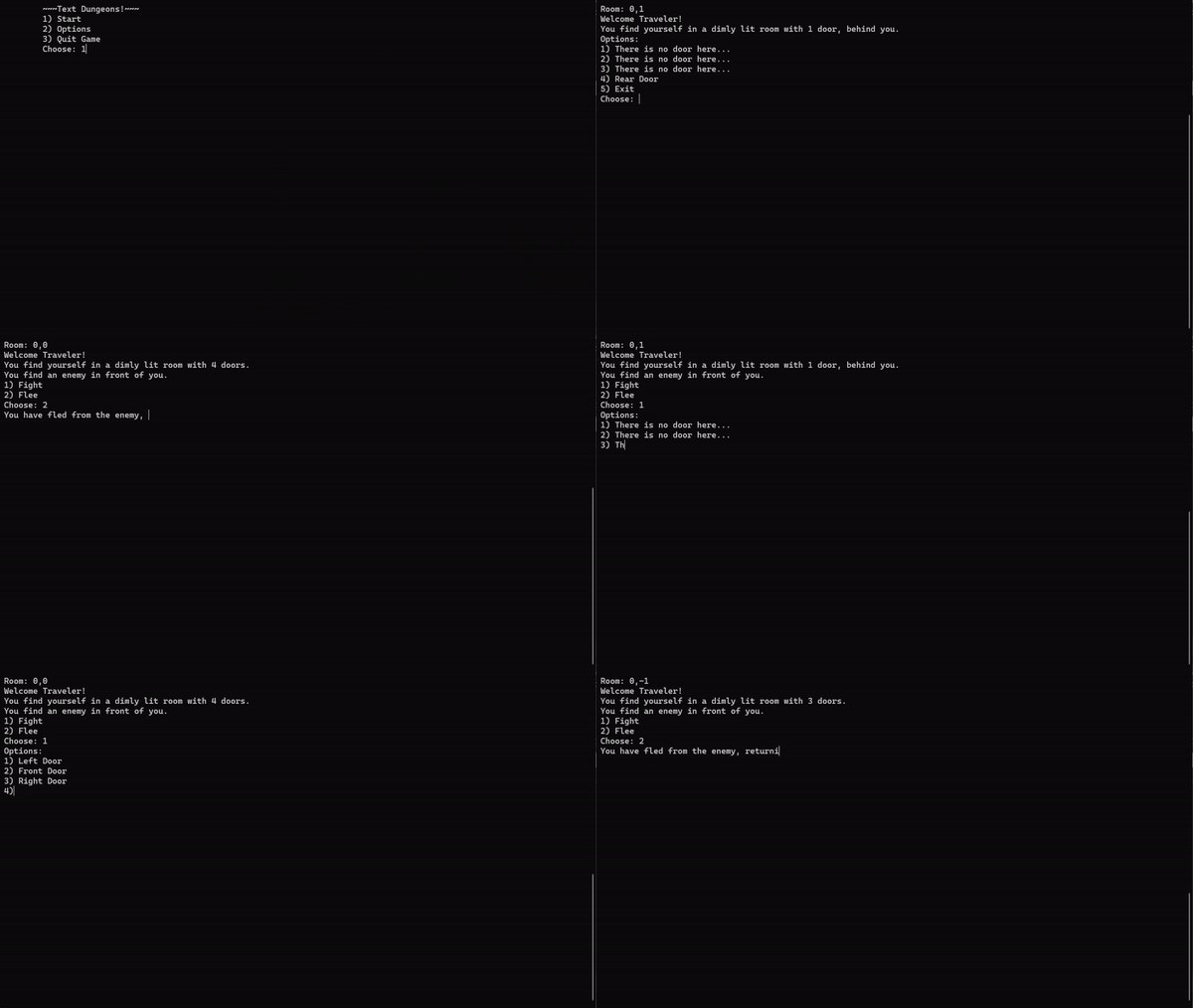
When you arrive in a room that has an enemy, which is currently always true for testing, you are prompted to fight or flee. Choosing flee will rotate you 180 degrees and send you right back through the door to the previous room. Choosing fight will start the challenge, or so I have planned! Currently, there is no true enemy, and you simply continue to the normal room movement options.
I’ve been so busy with class this week that I haven’t even touched my Roguelike project. That being said, I’ve been learning a lot in this class! Most recent lecture and lab were on Linked Lists! I learned to take a list and either add an item to the front or back, and to erase an item from any location or even clear the entire list.
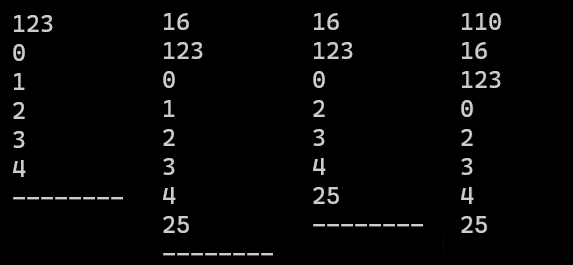
As you can see here, I have a few examples. First, I populated a list with 0-4 and pushed 123 to the front. Next, I pushed 16 to the front and 25 to the back. After that, I removed the 3rd item, “1”, to finally return to pushing 110 to the front. I did not show clear as an example however, as it would simply be a back background with no numbers!
This has been a very busy week, so I was unable to find time to work on the Roguelike during the week, however I did work on it right after last week’s post, getting the overhaul I previously mentioned fully finished!
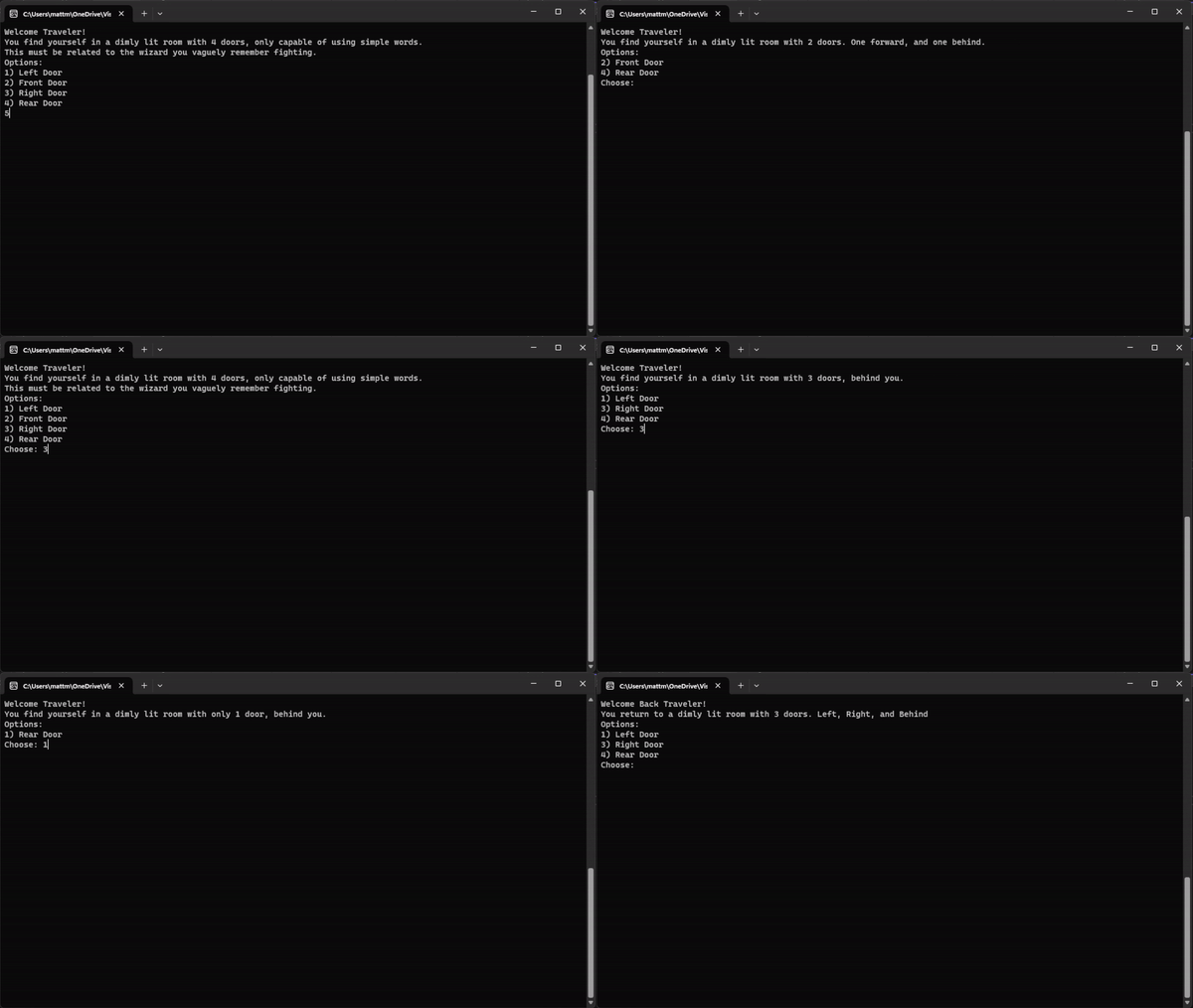
However, this was a massive change! I completely re-wrote the entirety of my room generation, deleted the old rooms I had to create a single room that replaced all the old rooms on its own. With that, I was able to correctly adjust the character’s rotation, allowing you to move through rooms in a way that moving forward doesn’t always mean north. This can cause confusion, I’m sure, but once I add more details, such as random items, rooms will be more unique and easier to traverse. For now, I’ve added the room coordinates to the top to help traverse for testing purposes.
Happy Thanksgiving readers! I’ve been spending this time playing around with ideas to practice my C++ skills, and I thought why not build a Text-Based Roguelike game? So far what I have is very basic, but I have some ideas to improve it by making each room more disconnected, making it easier to move from one room to another whilst keeping track of where you are.
Step one is being able to move from room to room. This step, however, may have to be completely rewritten, as I have an idea to keep the rooms connected but separate, as right now if you return to an old room it doesn’t treat it completely correctly. Currently if you return to a 2 door room from the wrong direction it can lead to you walking into rooms the wrong way.
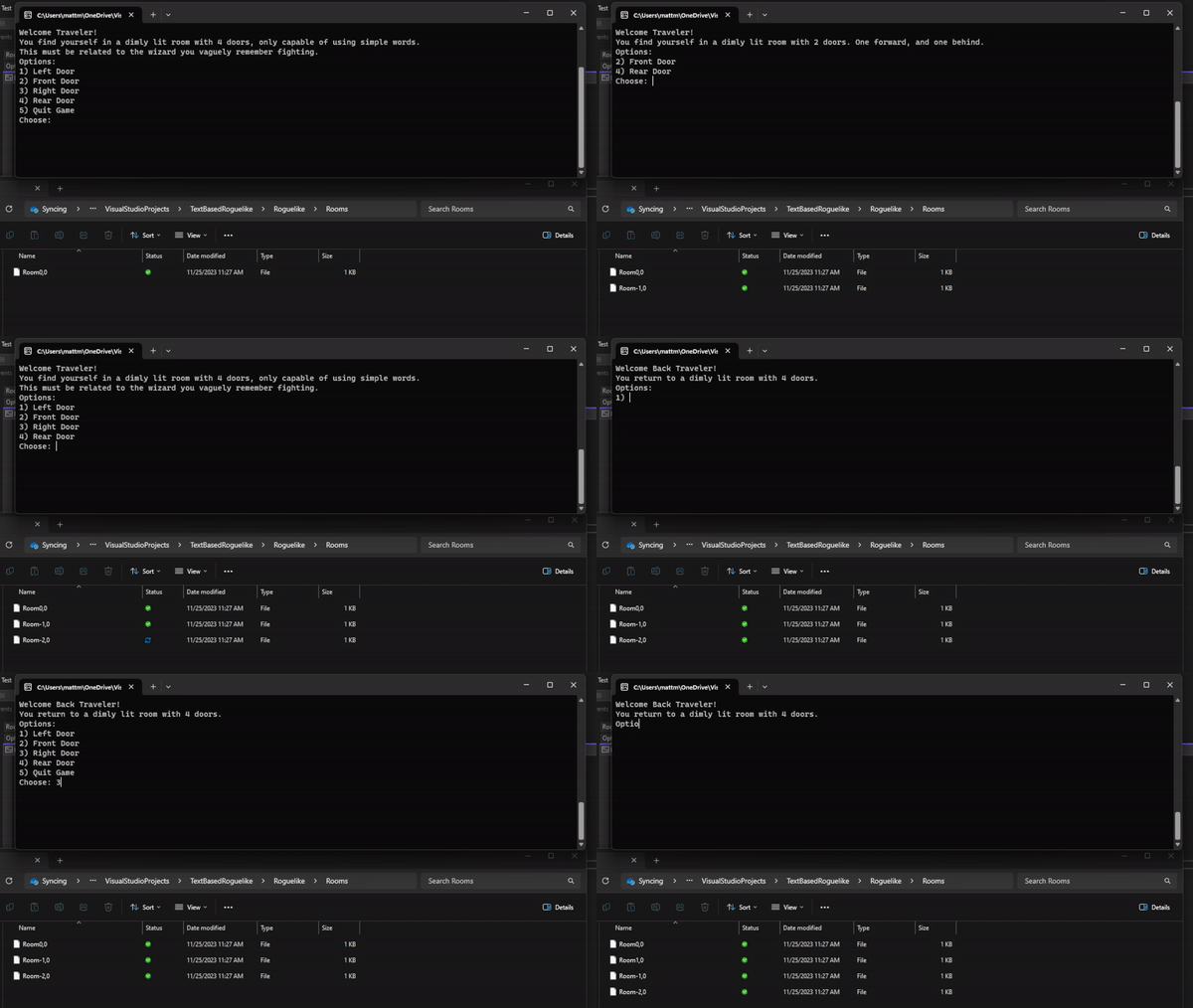
Next, the filing system. I took inspiration from Minecraft based on their chunk loading system using the coordinates of the room to be able to easily return based on where you are. So far this has worked well enough, but I will need to change what information is stored within these files, partially as the game evolves and partially as I change how the room to room movement functions. Overall this has been an amazing learning experience, however!
Going to school for Game Development doesn’t always mean working in Unreal Engine. In fact, all of what I’ve been doing in this blog so far was extracurricular development to become more familiar with Unreal Engine before classes start using it. Mostly, I’ve gone through core classes including Calculus and Discrete Math. These past two months, however, were Programming 1 and 2 in C++ and I’ve learned lots, even given my background knowledge in programming in general. These skills come in handy, but in ways you wouldn’t expect a lot of times.
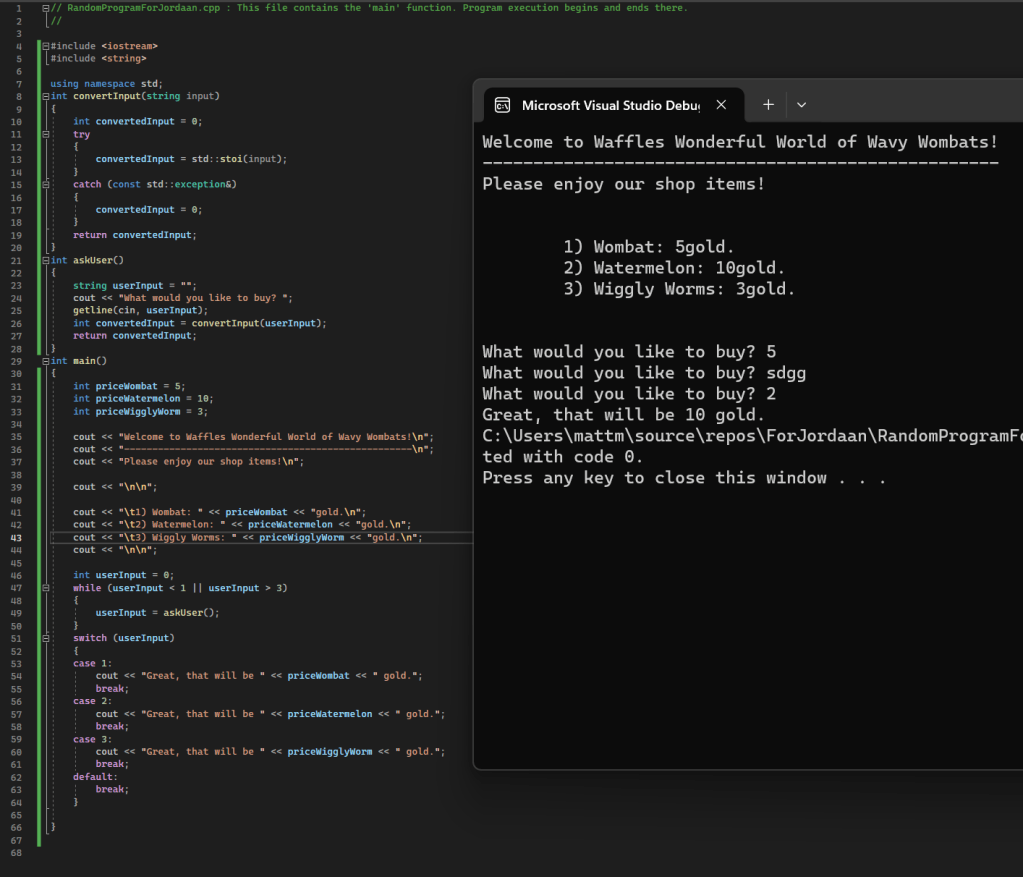
My cousin asked me for some quick sample code for a marketing assignment he had, and my first thought was simply, “What could I build quickly that is fully functional?” I remembered making a shop in an optional challenge in Programming 1 and decided to rebuild a quick easy version of that shop for him with a fun name because it sounded silly! Now, I’ll be the first to admit there are issues in this code. However, I made it in like 15 minutes, and I had to keep it all in a single class with a couple methods so I could easily take a screenshot of the entirety of the code, as opposed to multiple screenshots.
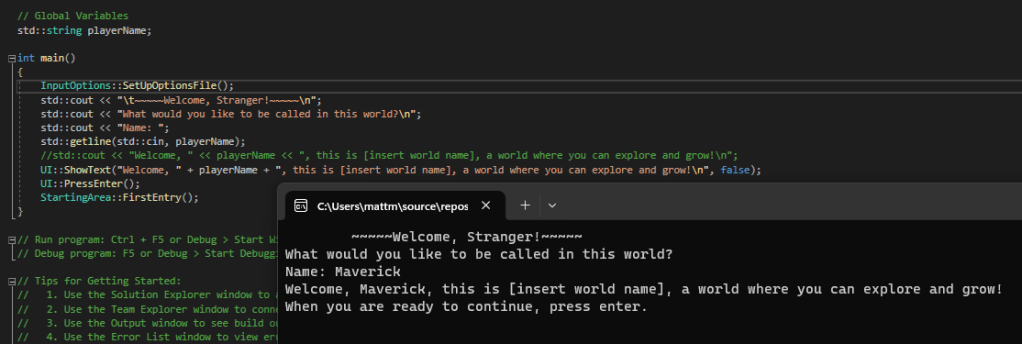
That reminded me of the text-based game most people know, called Zork, which was also re-created within Call of Duty: Black Ops. I figured it would be good for coding practice, so I started typing. First getting the player name and introducing them to the world, and then giving them a moment before throwing them in, by using the enter key to officially start playing.
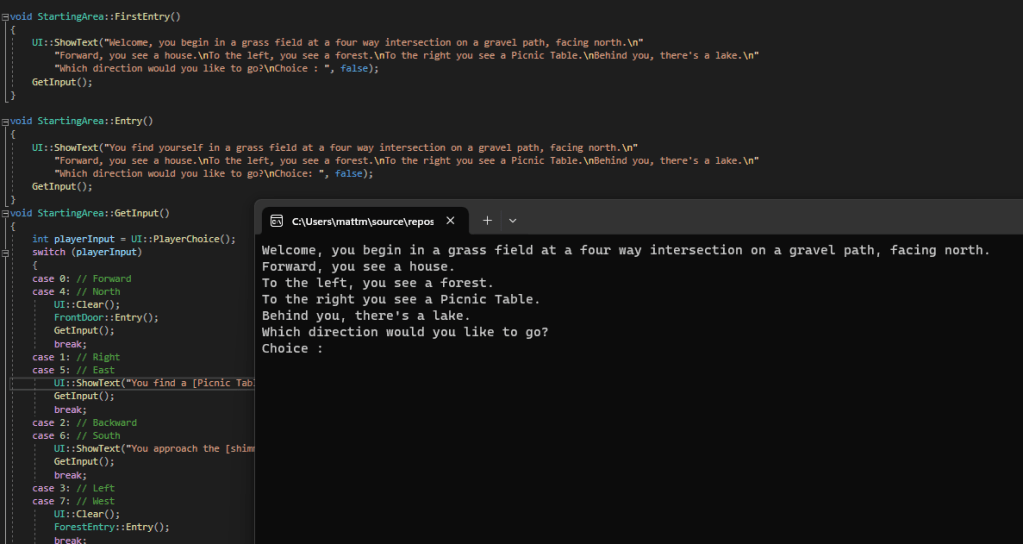
I’ve created two basic areas so far with the grass field being the first area you enter. From there, you can choose what direction to venture toward to create your own story! However the forest entry and the front door of the house are the only areas I have created thus far, so for now it is very limited.
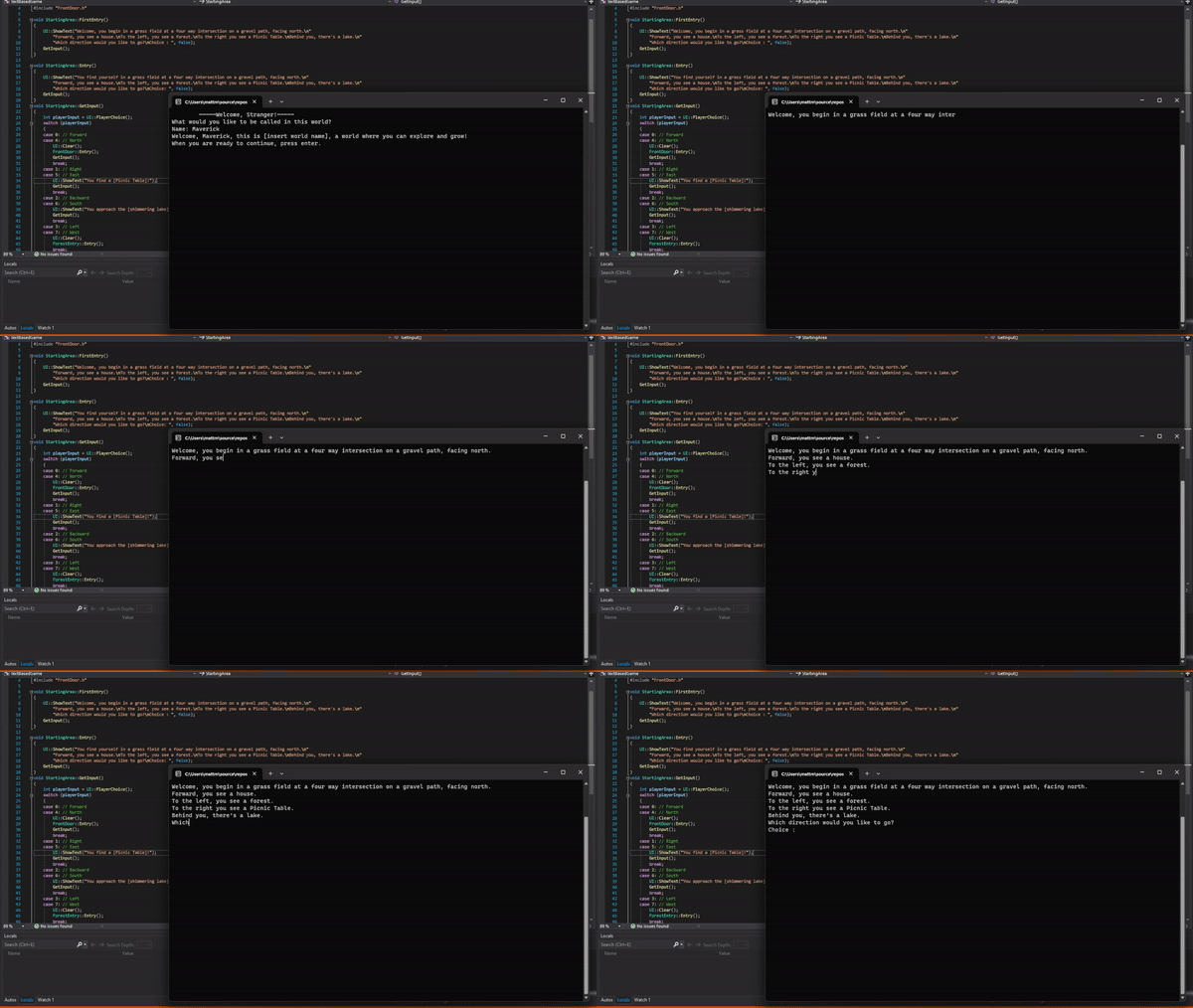
Something we learned in Programming 1 was how to create a time-based display, similar to Pokémon, which I absolutely love using, so I added that to give the player a feeling of fluidity in the text, as opposed to all the text popping up on the screen immediately, with no real transitions.
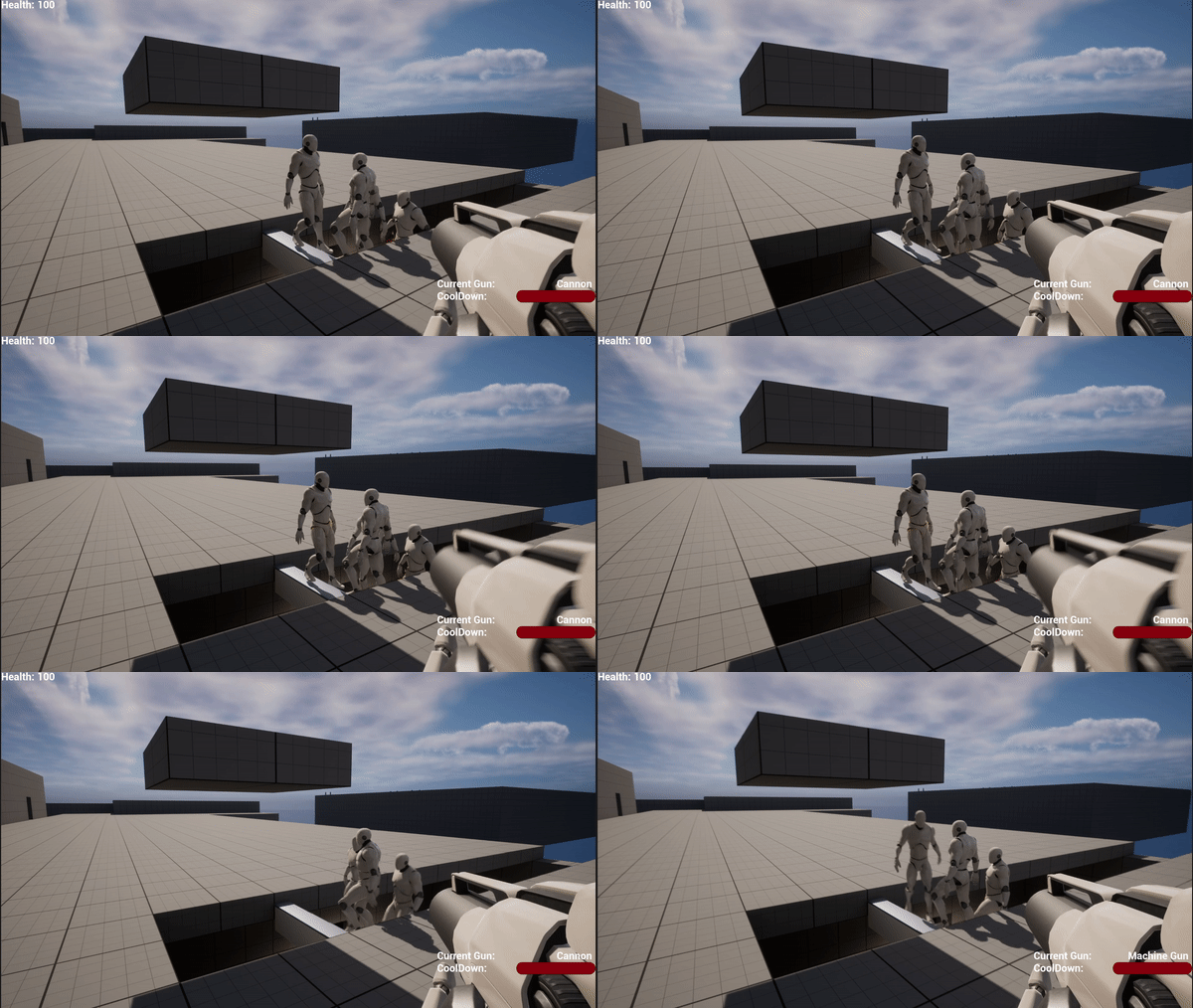
This week I’ve been quite busy, but I still managed to work on one section of this game, the weapons! Firstly, we have the default weapon that comes with the First-Person Template, which I called Cannon. This is a very low cool down rate, allowing you to click quickly enough to shoot at a rapid rate.
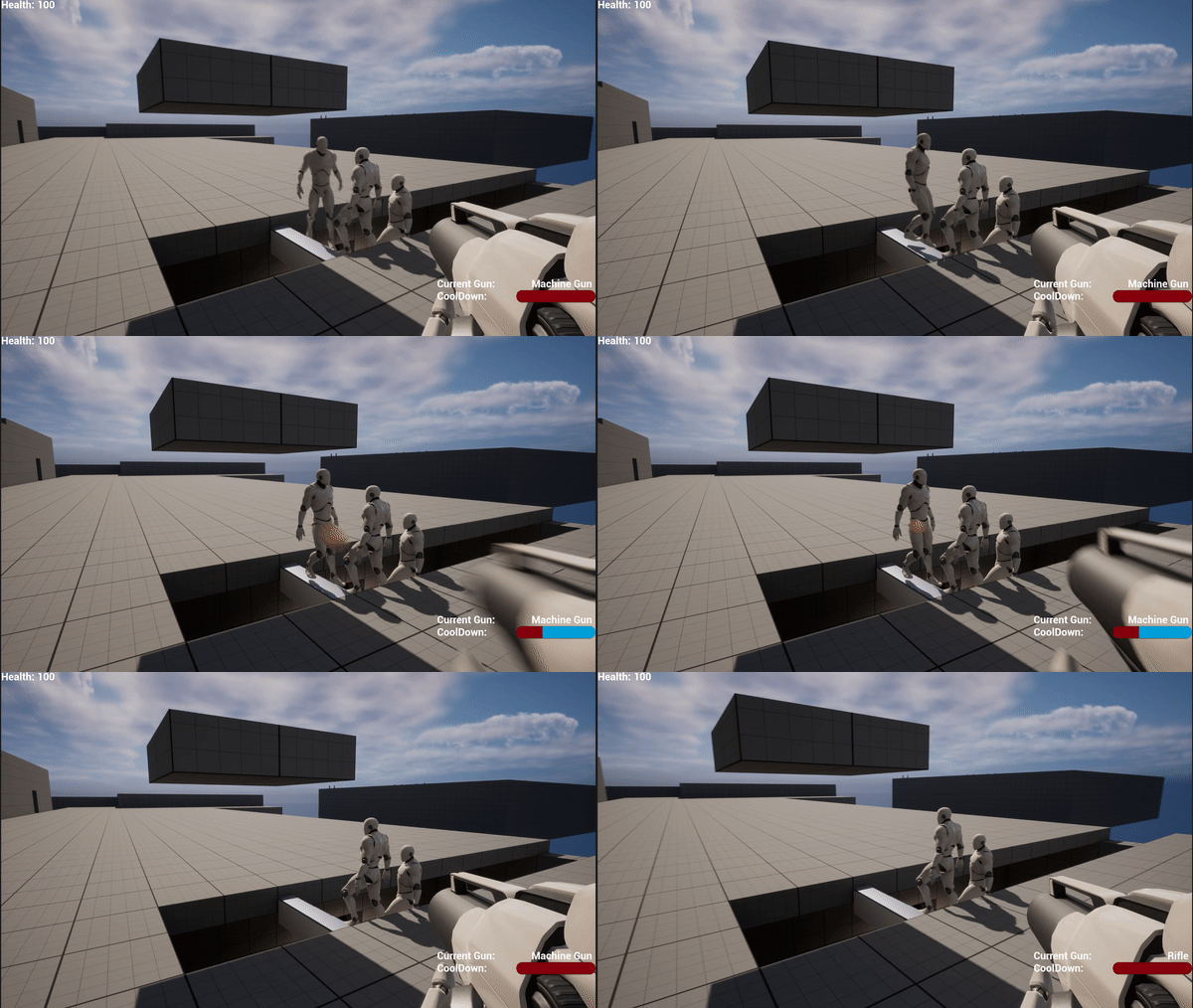
Secondly, we have what could be called a Machine Gun, an Assault Rifle, or many more names. The cool down rate is a bit slower on this weapon, however you can click and hold to fire, as it’s a fully automatic weapon.
Thirdly, we have a Rifle. This rifle has a much slower cool down rate, much like a bolt action rifle. However, it’s much more powerful to make up for that. With the Cannon and Machine Gun dealing a single damage per shot, taking five shots to kill an enemy, this Rifle deals five damage, taking only one shot to kill the enemy. On top of all of this, I made a bonus feature for testing.
This bonus feature is the cool down bar at the bottom right of the screen. I originally made these exact gifs without that bar and thought it would be better to show the difference in a more visual manner, and thus the cool down bar was created. This bar can be used for more than just the weapons, in the long run, but for now are perfect for testing the current weapons.
This week I’ve been working less on the functionality, and more on a map to play around on. This being said, that’s not to say I didn’t work on functionality at all! I have two major updates for this week’s blog post!
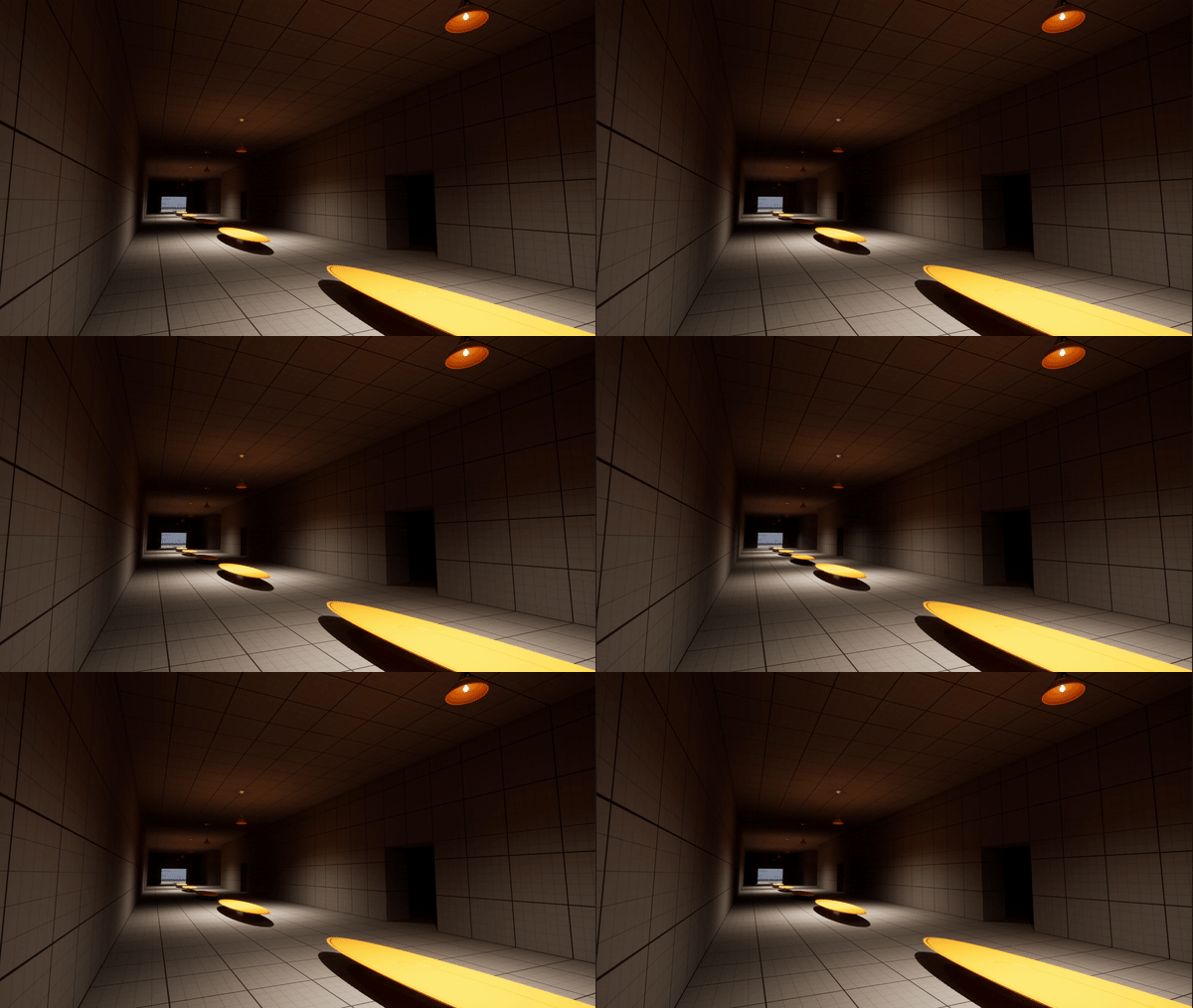
As for map design, I’m focusing on the concept of a creepy school. This idea came by part from Phasmophobia, and by part from a dream I had many years ago, of which I have directly modeled the first hallway based off that dream, though using only the Unreal Starter Content.
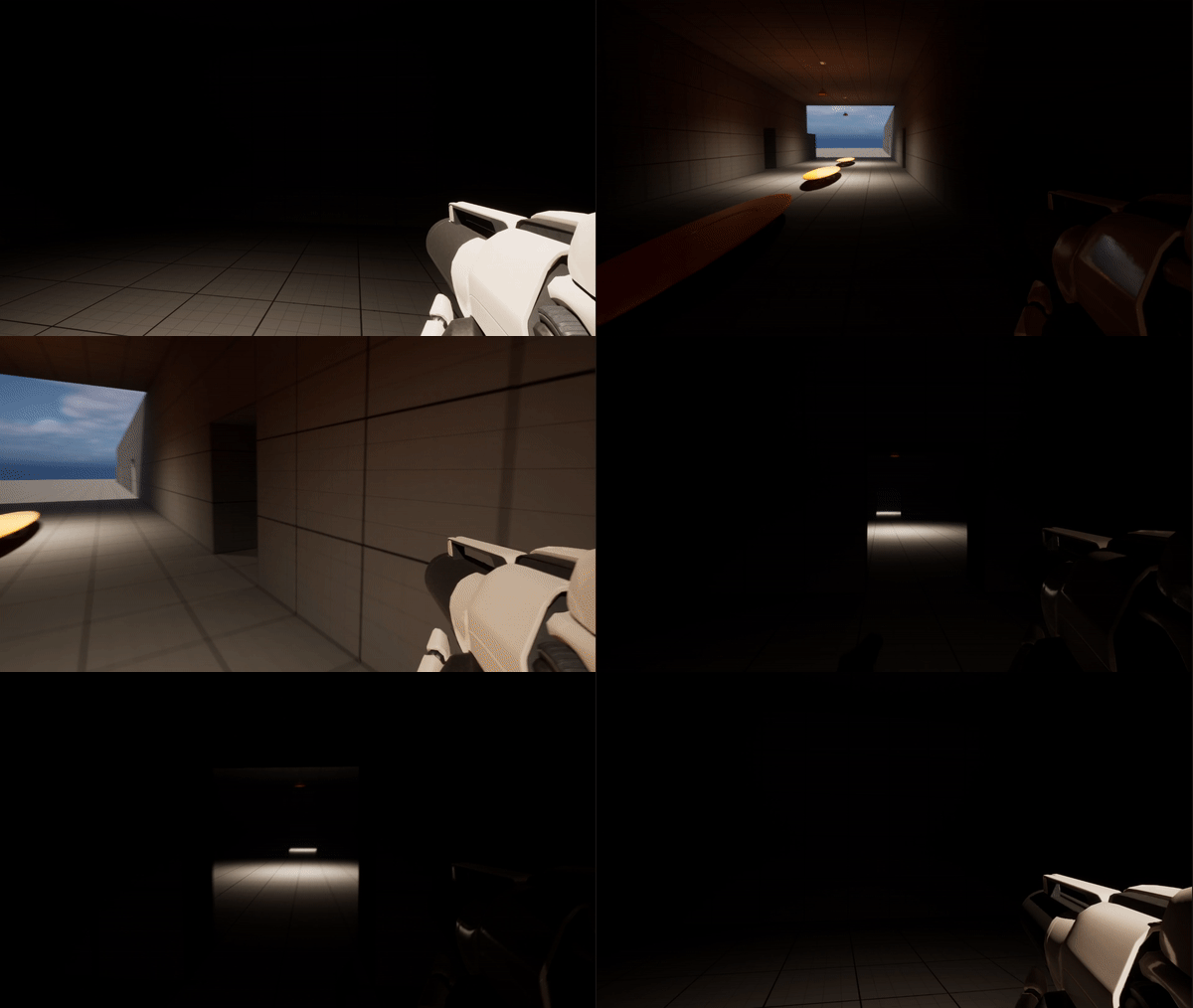
Next, I began to work on the non-euclidean geometry, a feature I absolutely love about many games, such as Anti-Chamber, or Layers of Fear! As you walk through one door, you end up in a room you were not expecting! Then, as you try to go back you end up in a DIFFERENT room, making the map more and more confusing for each layer of room swap!
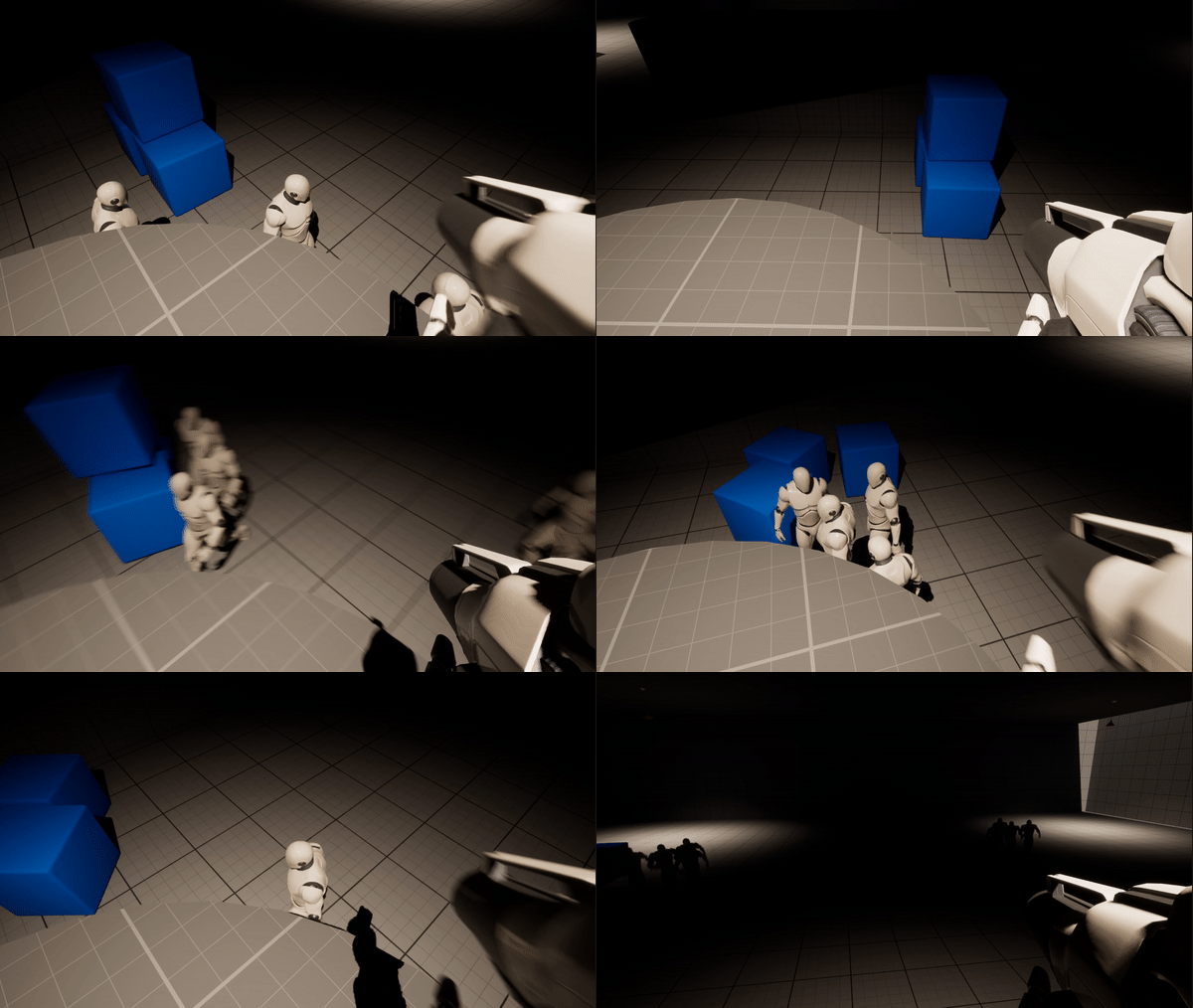
This last week I’ve been playing around with some more ideas, which include learning how to add some basic AI to an NPC to chase after you, how to kill them with bullets, and more!
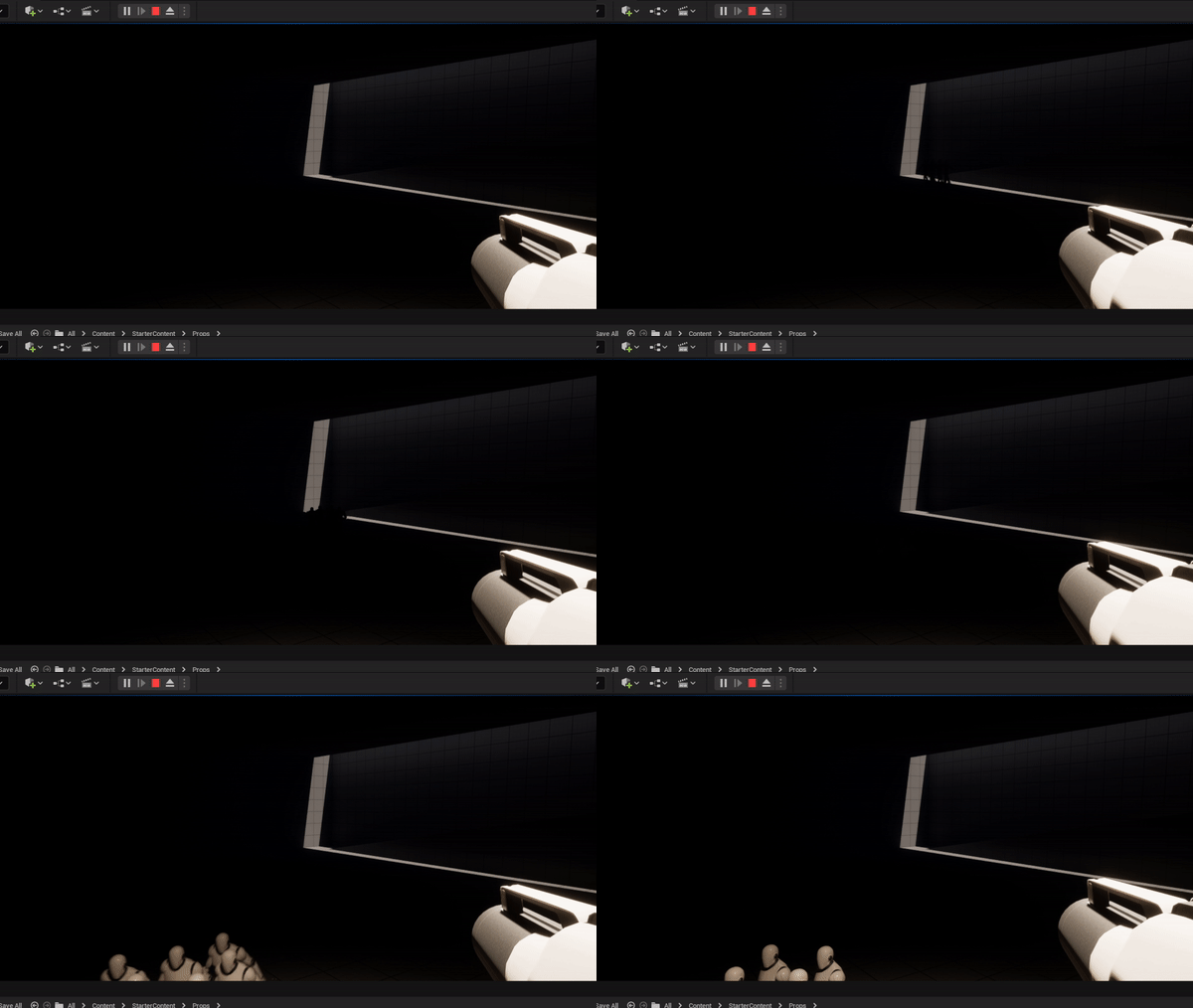
Firstly, I learned how to make NPC’s that chase after you, and then by accident I made the map slightly spooky through lighting, or lack thereof!
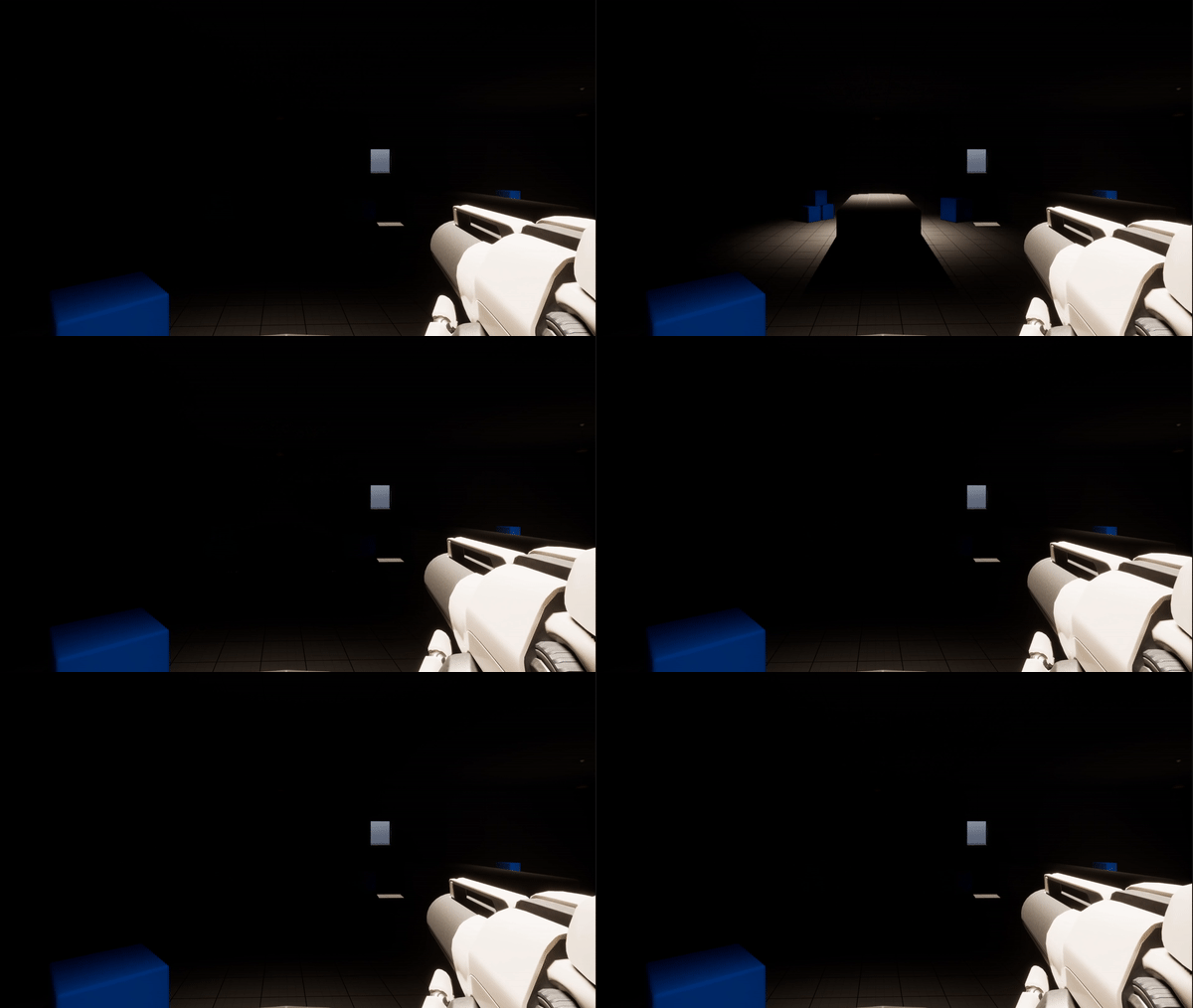
Once I had that figured out, I started playing with the idea of flickering lights, using a random interval within a specified range to make it look a bit more natural as a broken, flickering light would be.
Lastly, I worked on a very important feature, waves! Now, more NPC’s do not spawn until after you have killed all the currently spawned ones. On top of that, each wave they increase in health making it more difficult over time!
I’ve had a crazy past couple months, learning so much both in class and on my own! I’ll add a few examples in for what I’ve been working on, but so far I’ve created TicTacToe, created a number puzzle game from some old Mensa books, and started working on some ideas that involve a personal game idea I’ve had for a while! Also, I’m going to set a reminder on my phone to post weekly at minimum from now on, to keep you all updated on my progress!
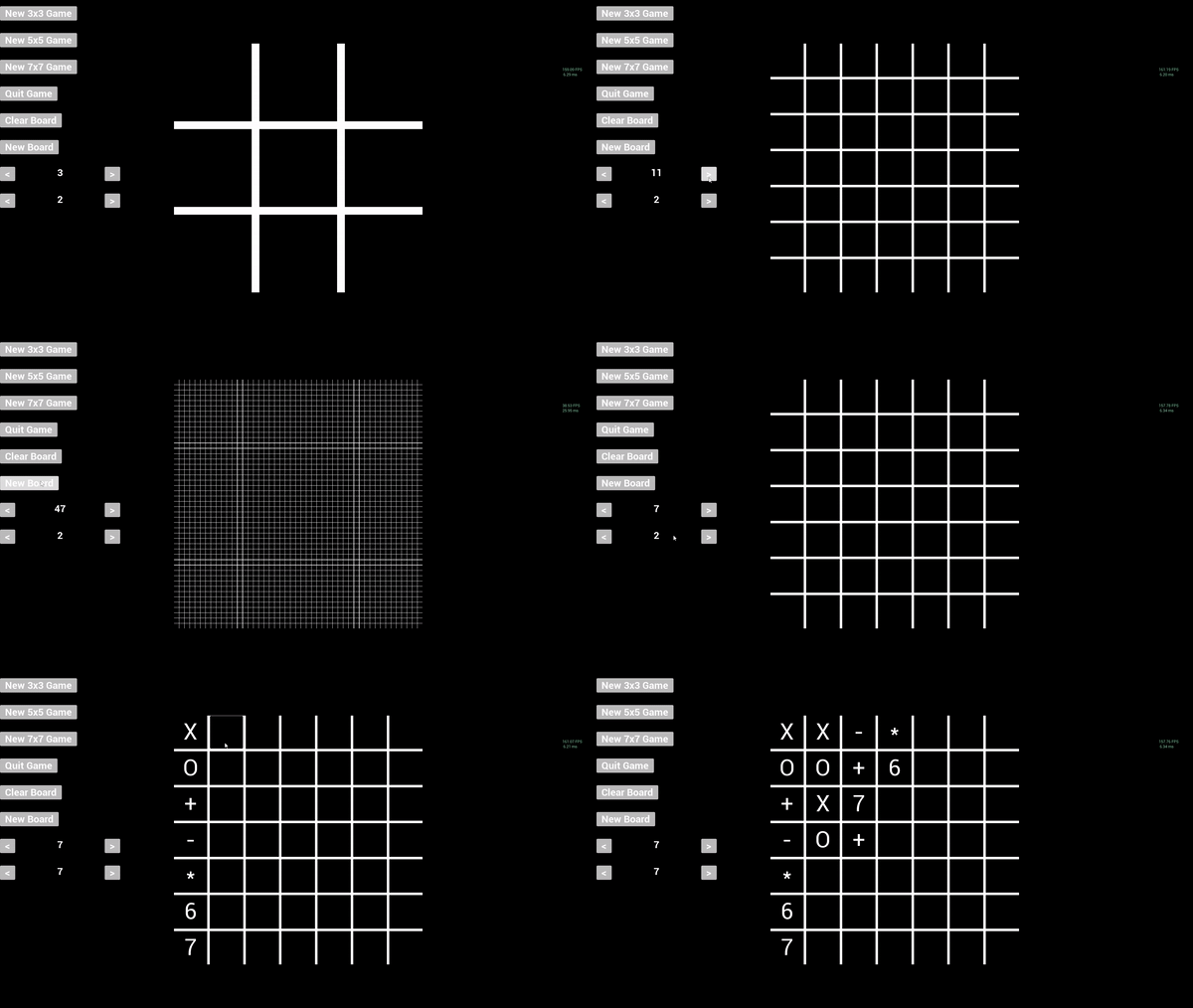
Firstly, let’s discuss TicTacToe. These are some long gifs, so I had to lower their framerate, but as you can see I have created a fully scalable TicTacToe board, which can go up to 47×47 on my current screen size, with an added bonus of allowing for more than 2 players! I set it to be a max of board size, meaning you can have up to 7 players on a 7×7 board, and so on, which the method of checking for a win being scalable with the player count as well.
Secondly, we have a game called Spokes, or WagonWheel to some. My dad found it in a Mensa book a long while back and has been begging me to make it for him since High School. I was finally able to create it, with some added bonuses including a line size slide bar to make the lines slightly larger, a Number Hints button which shows the total needed active lines, current active lines, and the difference between the two, plus the color hints button that shows when a specific circle has too man, not enough, or the correct amount of active lines next to it! Needless to say my dad was very excited! On top of all that, you can download it to play the game for yourself at:
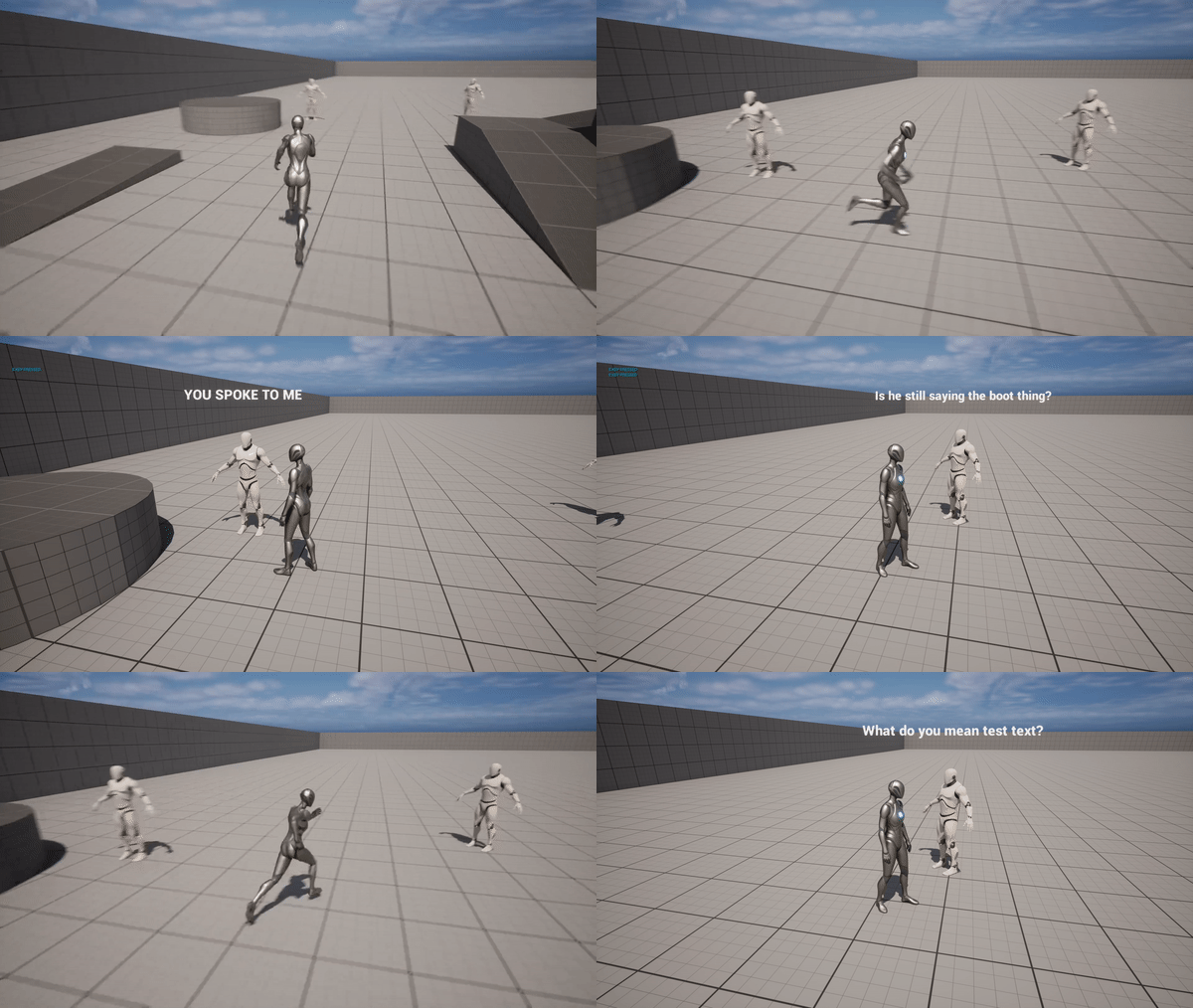
Finally, we land on what I can only label as a surprise. This game is an idea I have had for a decent while, but for now I am starting off small by learning to create specific functions required for the much larger project this game will become. Currently I have learned one method of detecting when the player is near an instance of the NPC. This then shows the text above their head, which disappears when you move away. With that, I was able to have a speak mechanic to move to their next piece of text, thus “speaking” to the player. For a bonus, I learned how to make this in a way that each NPC can have completely unique text, while using the same base code and not having to start from scratch for every NPC I need to build within this game!
Overall, I’ve been extremely busy learning and building these past few months, and with everything I’ve created I’m only in Programming 1 so far, relearning the basics of programming. Needless to say, I’m excited to come back to these extracurricular projects in upcoming classes as I learn better, more efficient ways to build some of the functions I’ve built in these projects!
Hey everyone! You may be wondering where I’ve been, and I have some amazing news for you! After having that fun re-learning Unity Basics and after about a day of looking at Unreal Engine I was extremely excited about my new journey and got carried away diving head-first into my classes! I am going to try my hardest to post more often than I have in the last month and a half, but I can’t promise a daily post the way I did when I started this blog. Though I’m still in the Gen Ed portion of my studies, I am already playing with Unreal Engine 5 in my free time and learning a lot!
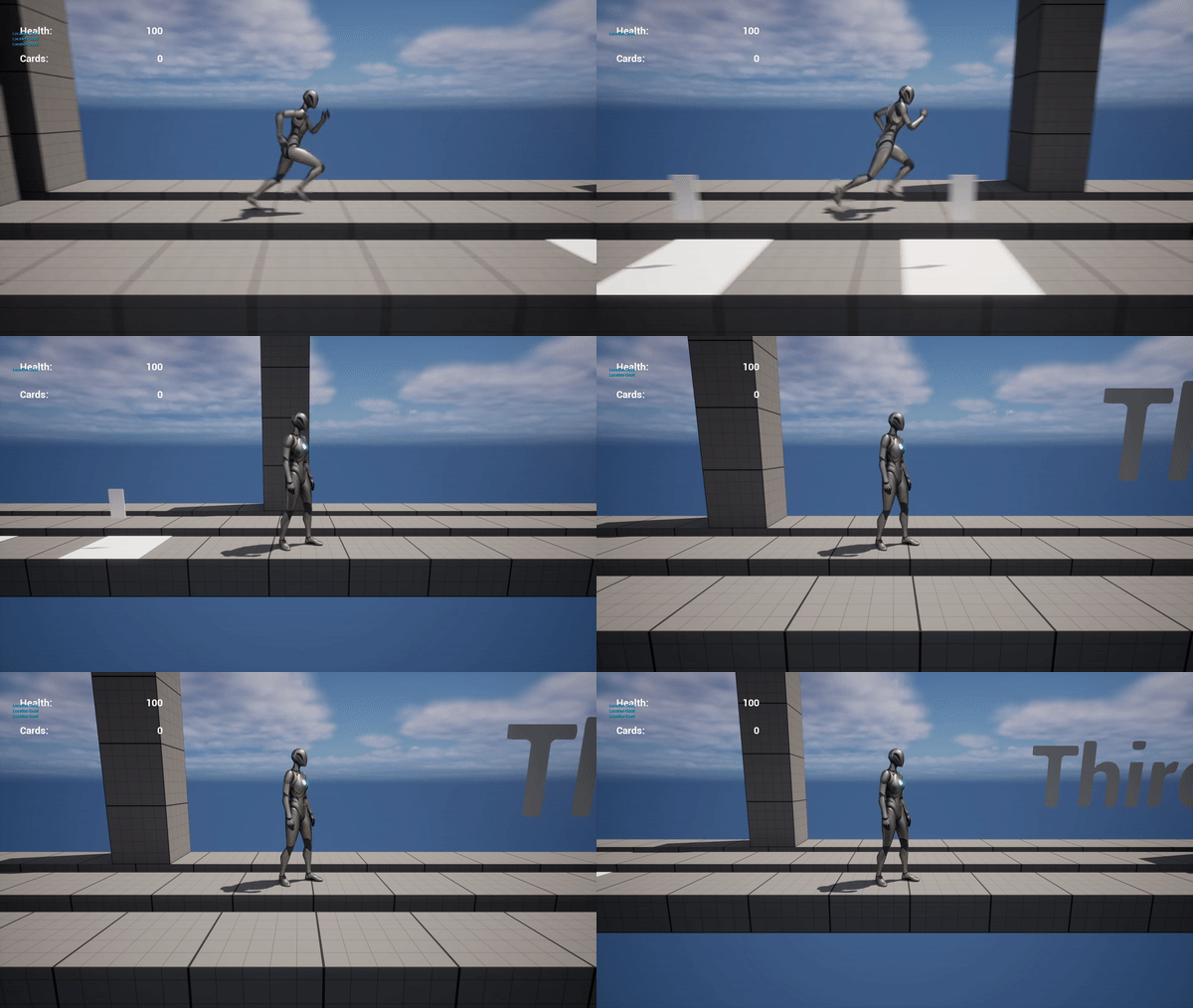
One thing I’ve learned is the basic movements in a third person game, but also how to teleport between different layers of a side scrolling level. On top of that, I made sure to stop the character from teleporting against or into walls to keep the character on the correct platform!
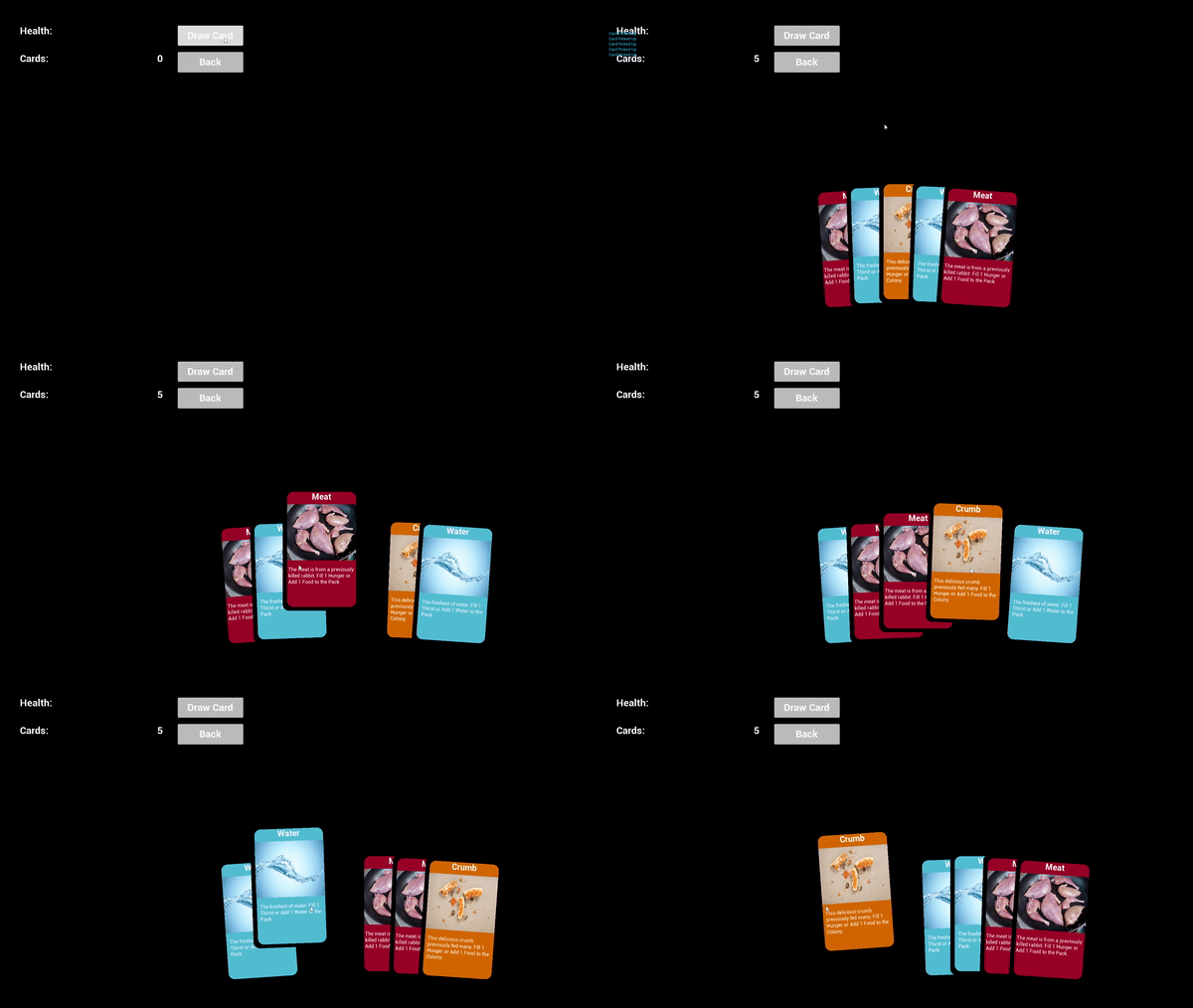
On top of that, I also learned how to make the basics to a card game, even allowing for the cards to be moved around in the hand for your own organizing purposes. Getting the moved card’s opacity back to fully opaque after being moved proved to be harder than expected, but I figured it out!



 Maverick Learns